
How to Measure Brand Visibility in ChatGPT with iSearch Solution
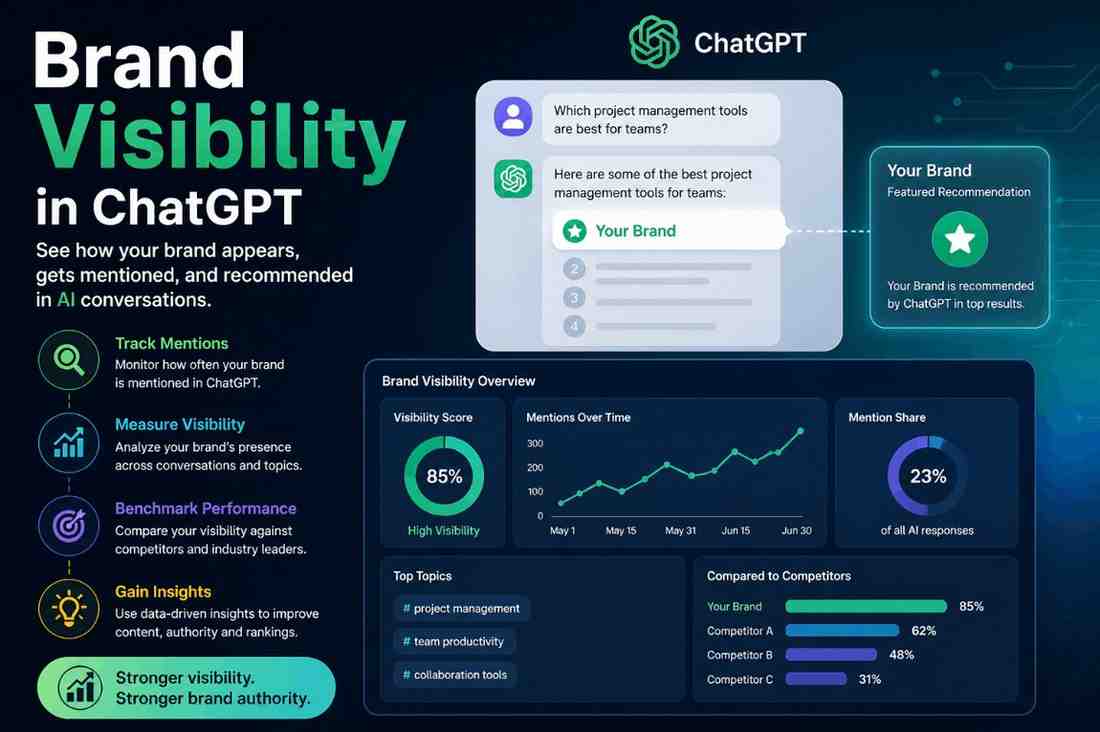
Search doesn’t just rank anymore because in 2026, it recommends. Indian websites are seeing over 200% more visits from ChatGPT bots, and people are now finding content through AI rather than regular search. Yet most Indian marketers have no system for measuring or improving this visibility.
Nowadays, ChatGPT and similar AI tools are shaping brand discovery. For example, you’re a digital marketing company based in Delhi that provides LLM optimization services, Technical SEO, AI SEO, and more.
Now, when someone asks ChatGPT, “Best technical seo services in Delhi,” there are two options: either your brand appears in that answer, or it doesn’t. If your brand name is not visible in the AI overview or ChatGPT, you’re invisible at the exact moment a buying decision begins.
This blog post covers a metrics-first framework to track and grow your brand’s presence in ChatGPT and other AI answer engines. Whether you’re a content creator in Delhi, a content marketing company in Bengaluru, or a D2C founder scaling nationally, by following this guide, you can stay visible where decisions are actually happening today.
Key Insight
Your brand might rank #1 on Google for “social media marketing services in Noida,” but it never appears when someone asks ChatGPT the same question. Traditional SEO and AI visibility require separate — and simultaneous — measurement systems.
Why Tracking Brand Visibility in ChatGPT is Important
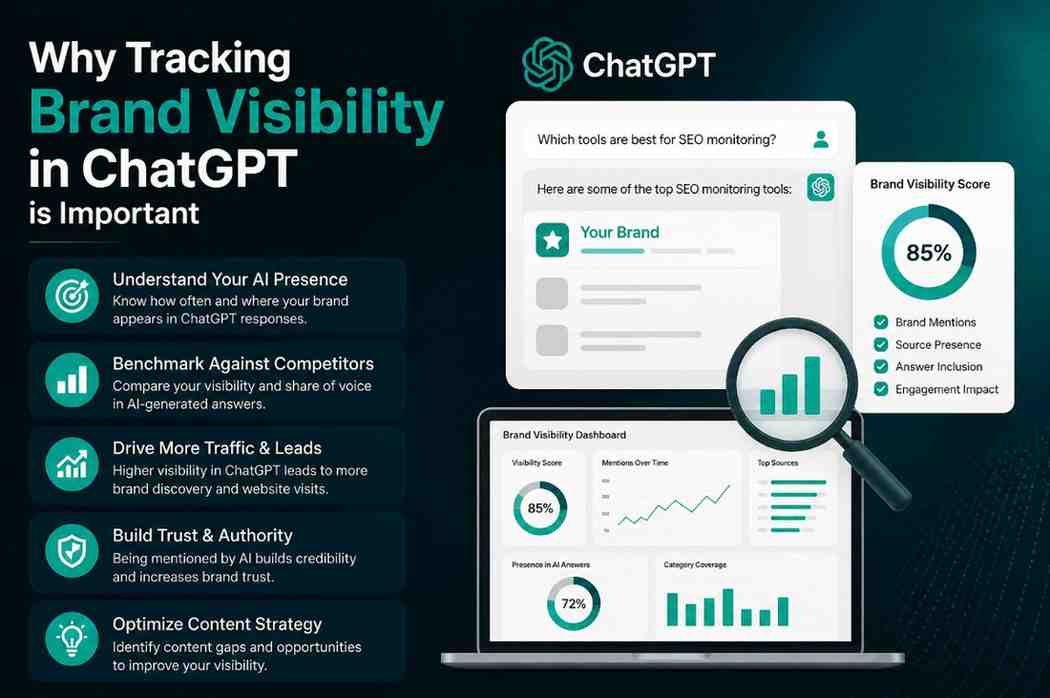
ChatGPT visibility shows where your brand stands in real-time conversations where people are deciding what to buy. Tracking brand visibility in ChatGPT helps you understand how often your brand appears, how it compares to competitors, and where you’re losing ground. With it, you get clear direction to improve your SEO, AEO, and GEO strategy and stay visible where it really counts.
AI tools don’t rank websites the same way Google does. According to expert LLM optimization service providers, AI tools analyze factors in depth, such as brand recognition, content quality, authority, and how often your brand is mentioned across trusted sources. It means even brands with lower Google rankings can show up in AI answers if their content is well-structured and widely referenced.
In simple words, your visibility in AI tools depends on how AI understands and selects your brand, not just how search engines rank your pages. For Indian marketers, this is a major gap. Many brands still focus only on SEO, and they haven’t started tracking their visibility in AI search engines and AI overview. Those who act early can build a strong advantage over time.
Core Metrics to Measure ChatGPT Brand Visibility
If you want real insights to measure brand visibility in ChatGPT, you need numbers that actually reflect performance. There are 4 core metrics that provide a complete picture of your brand’s AI visibility health.
1. AI Visibility Score
This is your overall performance score inside AI responses. It combines the inclusion rate, citation quality, and position in responses.
Formula:
AI Visibility Score = (Inclusion Rate × 0.4) + (Citation Quality × 0.35) + (Position Score × 0.25)
A score above 70 indicates strong visibility; if it’s below 40, your brand is barely showing up in AI recommendations.
2. Share of Voice
It shows how often your brand is mentioned compared to all other brands in AI responses. For example, if ChatGPT mentions 5 brands once someone asks “best digital marketing company in Delhi,” and your brand appears once, your share is 20%. Tracking this regularly helps you see if your visibility is growing or if competitors are starting to appear more than you.
3. Citation Frequency and Quality
Not all mentions are the same. If ChatGPT links directly to your website or a page, it means your content is trusted more. If this happens often, your authority is strong. Try to track how many links you get, which pages are being mentioned, and if your brand is recommended positively or just mentioned casually.
Track:
- Direct links to your website
- Brand mentions without links
- Context of mention
4. Competitor Displacement Rate
This clearly shows your real advantage over competitors in AI results. You can discover gaps where no competitor is visible, especially in regional or niche queries. You can also check 5 to 10 competitors every week. This will help you see where your brand is weak and where others are ahead.
Step-by-Step Framework to Track ChatGPT Visibility of Your Brand
If you want to understand exactly how your brand shows up in ChatGPT results, you need to use a smart tracking method that can be repeated every week. Proper tracking is essential because random checks will not work.
Below are some steps you can follow to help you track your brand’s visibility in AI results:
Step 1: Create a Prompt List
Start checking AI visibility by making a list of real questions people might ask about your services. Keep it around 50 to 100 prompts, so you get a proper picture. This step helps you test how your brand shows up in real AI searches.
Make sure you include different types of searches, like:
- Queries related to services
- Comparison-related questions
- Location-based searches
- Solution-based questions
Example prompts:
- Best content marketing company in Delhi
- The difference between PPC and Performance marketing
- How to rank a blog on Google
Step 2: Standardize Your Testing
To get accurate results, your process should stay the same every time. You can use the following steps to remove confusion and track real changes over time:
- While checking the results, use the same ChatGPT version each time you type the prompts
- Clear the chat history before running any prompt
- Always test at the same time daily or weekly
- Note down the results and keep a record of every response
Step 3: Track Key Data from AI
Don’t just look at the answers for every prompt; instead, record important details in a simple sheet. It will give you a clear view of your Brand’s performance on ChatGPT and Google AI. You can note things like:
- Is your brand mentioned or not
- Where your brand appears in the response
- Which competitors are listed
- Whether there is a link or just a mention
- How your brand is described
Step 4: Review and Compare your Competitors
Now, also look at your competitors using the same set of prompts and track 5 to 10 key rivals every week. For this, you need to focus on the following factors:
- Who appears most often in search results
- Who gets cited or recommended
- Who dominates certain topics or services
This step shows where you are strong and where you are losing visibility. Sometimes you’ll also find gaps like queries where no competitor appears. Those are your biggest opportunities to get cited or listed in AI search engines such as ChatGPT, Claude, or Perplexity.
Best Tools to Measure ChatGPT Visibility
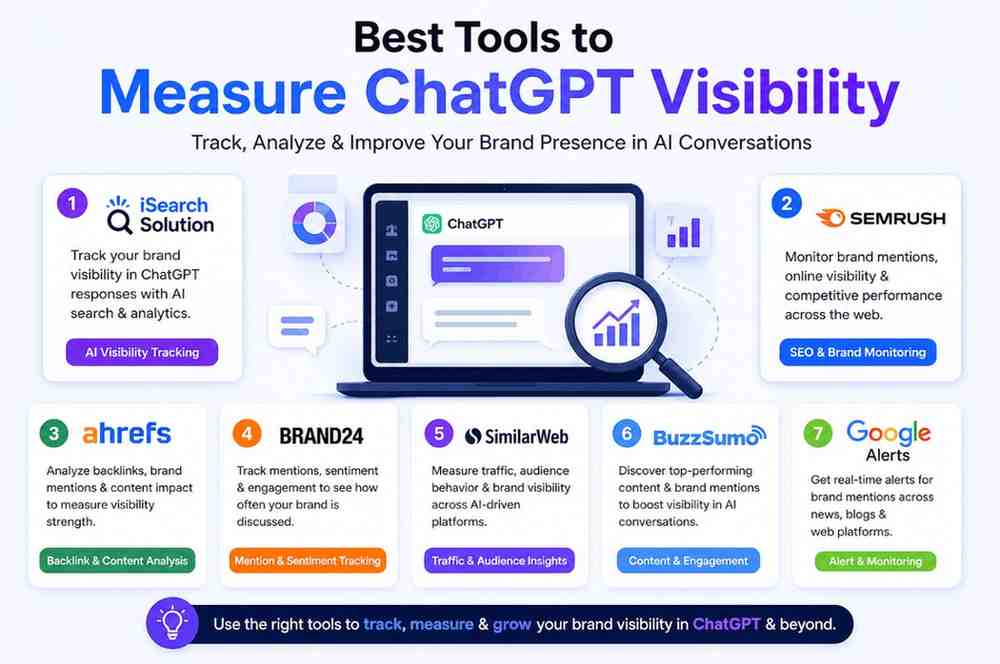
AI is dominating the world because it’s faster and smarter – economically, socially, and technologically. Businesses use these opportunities to create profit and reach the right customers. If you want to track how your brand appears in ChatGPT and other AI tools, you need to know how to use tools and platforms that show mentions, citations, and competitor visibility.
These tools help you understand where your brand stands in AI-generated results and what you can improve to achieve better performance. In reality, you don’t need expensive tools to start, but they can help you scale faster.
Here are some of the most commonly used tools:
- Semrush AI visibility toolkit to track the visibility. It’s best for brands already using Semrush for traditional SEO.
- AI monitoring tools like Peec AI or Profound. This is a good choice for marketers and small agencies who want to test their AI visibility workflow.
- FAII Chat Intelligence: it’s an automated cross-model monitoring tool across ChatGPT, Gemini, Perplexity, and Claude that provides AI visibility scores and share-of-voice dashboards.
- Server logs for free insights. This helps you identify the highest value pages for GEO optimization.
- If you have a small team, manual tracking can also work.
How to Improve Your ChatGPT Brand Visibility
There is no point in tracking any data if you don’t act on it. If you want to stay ahead of competitors, you need to work smartly. Here are practical ways to improve your visibility in AI tools and search engines:
- Structure your content for AI by adding FAQ sections, writing short and direct answers, and using clear headlines. This will support both AEO and SEO.
- Write a 40-60-word direct answer at the top of every major content section. This will mirror the AI model’s format when synthesizing responses.
- Build authority with content marketing because it still drives AI visibility. Focus on in-depth blogs, industry insights, and use case-driven content. AI tools prefer content that explains clearly and adds value.
- Build authority by getting featured in publications or trusted platforms so that AI models can recognize and suggest your brand.
- Strengthen technical SEO: page speed, structured data, and clean site architecture because AI systems rely on well-structured content.
- Invest in LLM optimization services because that’s where most of the brands lag. LLM optimization helps improve brand mentions in AI responses, increase the likelihood of citations, and align content with AI understanding. This will support GEO strategies.
Real Impact of Tracking AI Visibility
If you’re one of the Brands that track ChatGPT visibility, time to time, you’ll see real results:
- Better presence in AI recommendations
- Higher brand recall
- Increased qualified traffic
Even without clicks, your brand stays visible during decision-making stages, and more people become aware of it.
Case Study: A Jewellery Brand Hits 65% AI Visibility
A jewellery brand in Delhi used LLM optimization services provided by iSearch Solution. By tracking 100 prompts weekly, the brand reached a 65% AI visibility score within three months of implementing structured measurement and optimization.
Server logs showed 47 weekly visits to our pricing page from ChatGPT-User bots. This tracking revealed a 20% rise in trial sign-ups from an otherwise invisible AI channel.
The real results weren’t the traffic. It was the discovery of 14 high-intent query categories where no competitor had AI visibility – a content opportunity that a normal SEO audit would not find.
Final Thoughts
Brand visibility in ChatGPT is no longer optional for Indian marketers. It’s a modern revenue driver that most Indian brands are currently ignoring. Ranking on Google is still important, but it doesn’t guarantee your brand’s presence in AI answers and search engines. That’s why you need to combine SEO, AEO, and GEO with a strong measurement system.
Brands that act now will build long-term visibility across AI platforms, while others struggle to catch up later. Start simple by testing your brand on ChatGPT, tracking key queries, measuring your visibility, and then improving step by step. Add one tool and run your first 50 prompts this week.
If you’re looking for services to measure or improve your brand visibility in ChatGPT or other AI platforms, iSearch Solution can help you get started. Visit isearchsolution.com to build your brand’s AI visibility strategy today.